





Introduction — Why Nice separates public and private beaches: a shoreline shaped by history, law and local practice
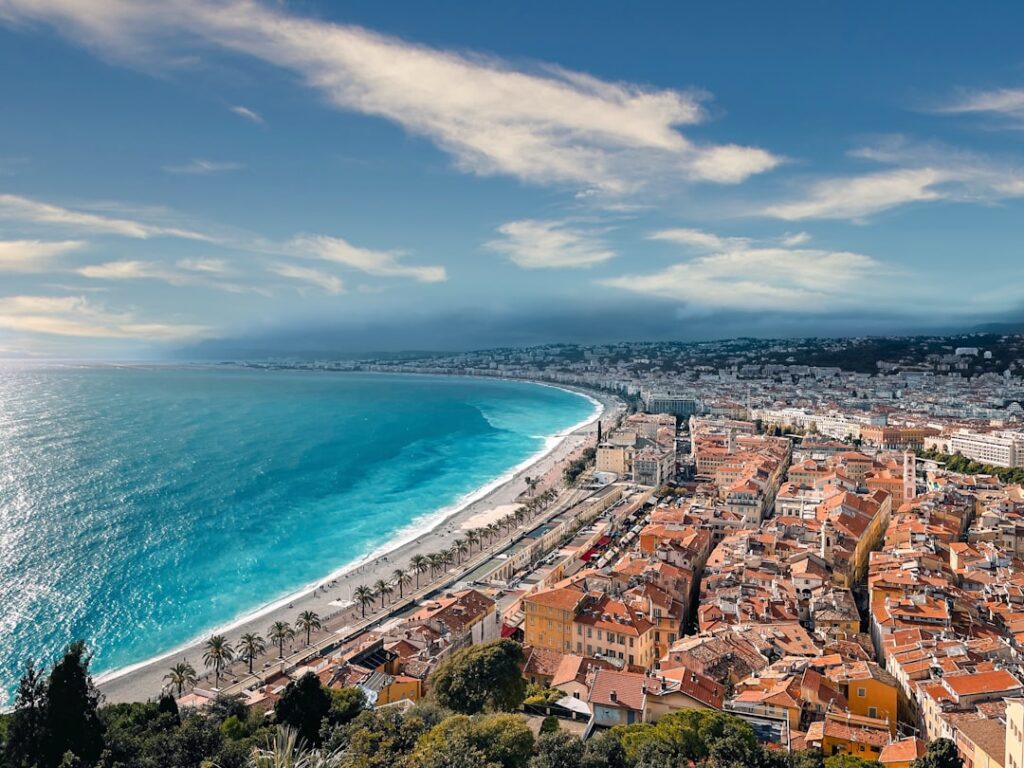
Nice, the capital of the Côte d’Azur, stretches along a bay of glossy pebbles and a light that’s hard to forget. The line between public and private beaches, obvious at first glance along the Promenade des Anglais, isn’t just an urban design or marketing choice: it’s the outcome of a century and a half of tourism, land issues, French law and social habits. To understand why Nice splits its beaches, how it actually works today, and what that means for visitors and locals, you need to combine urban history, maritime public law, hotel practices and local economics.
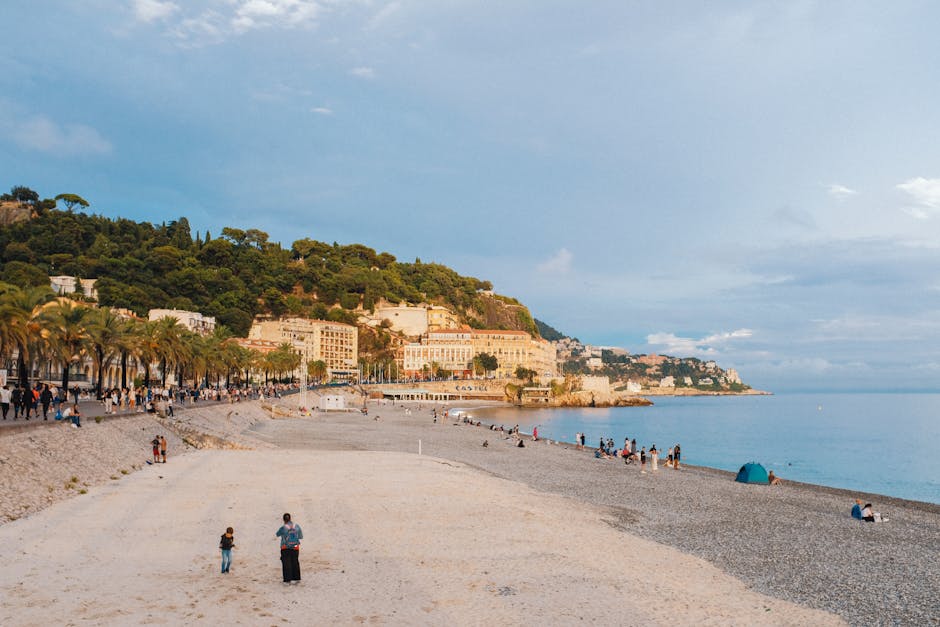
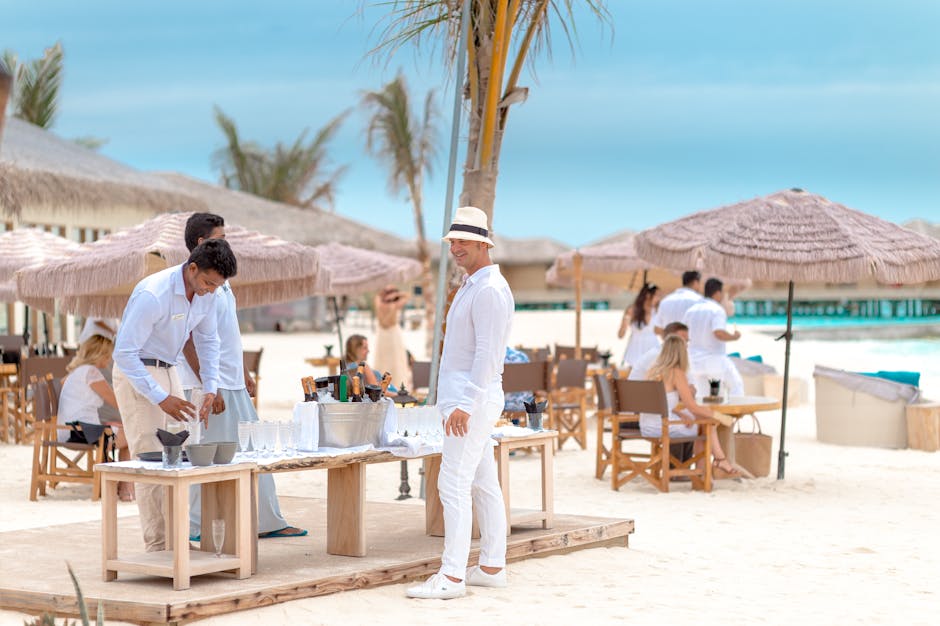
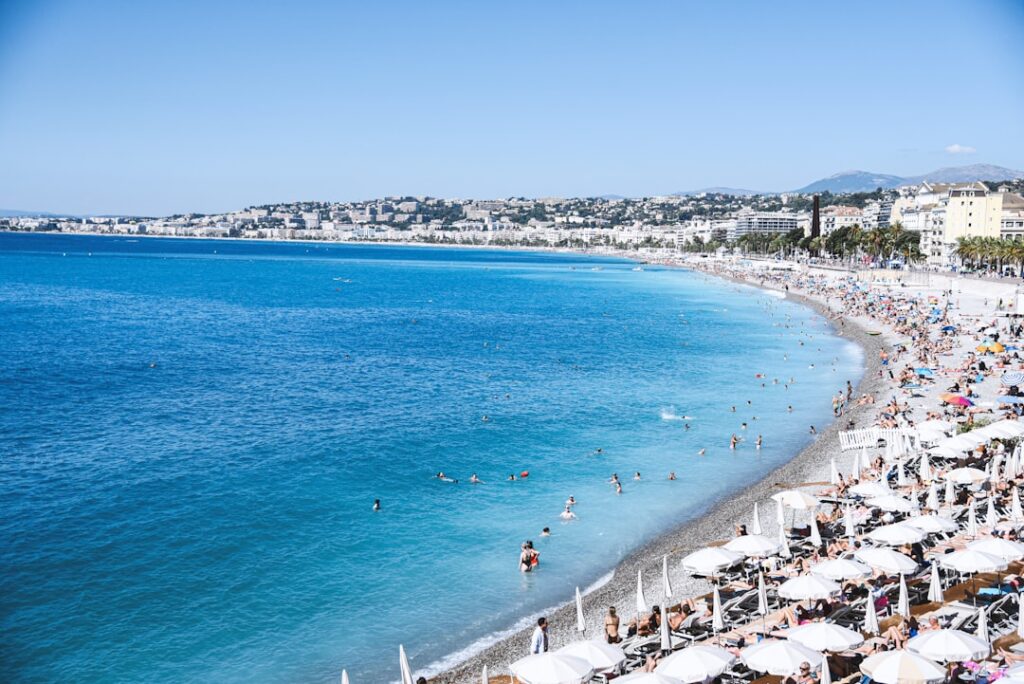
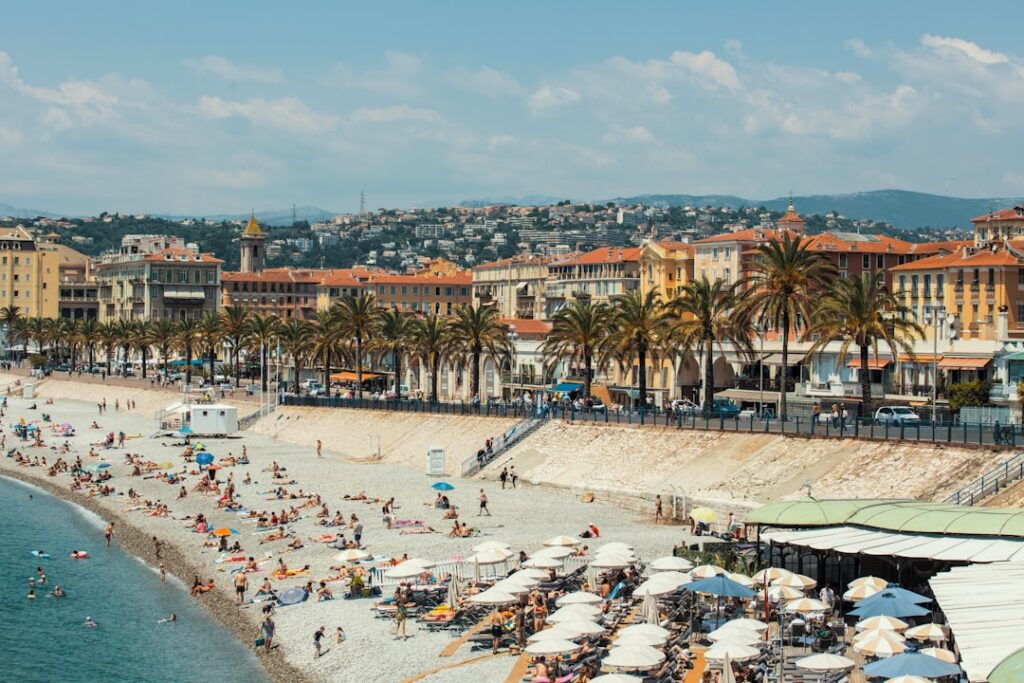
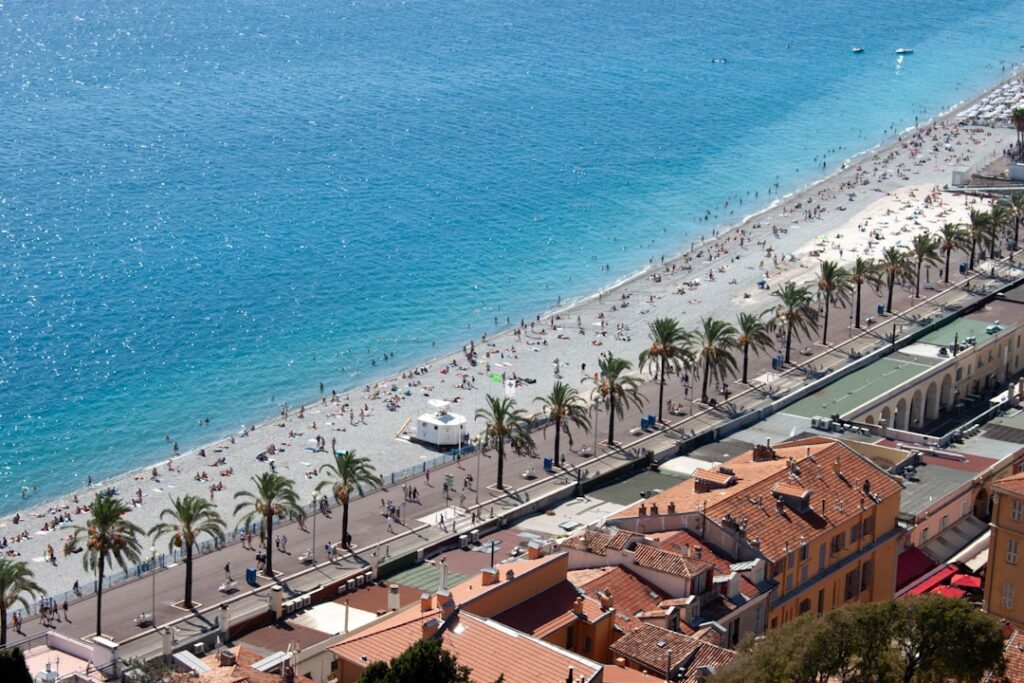
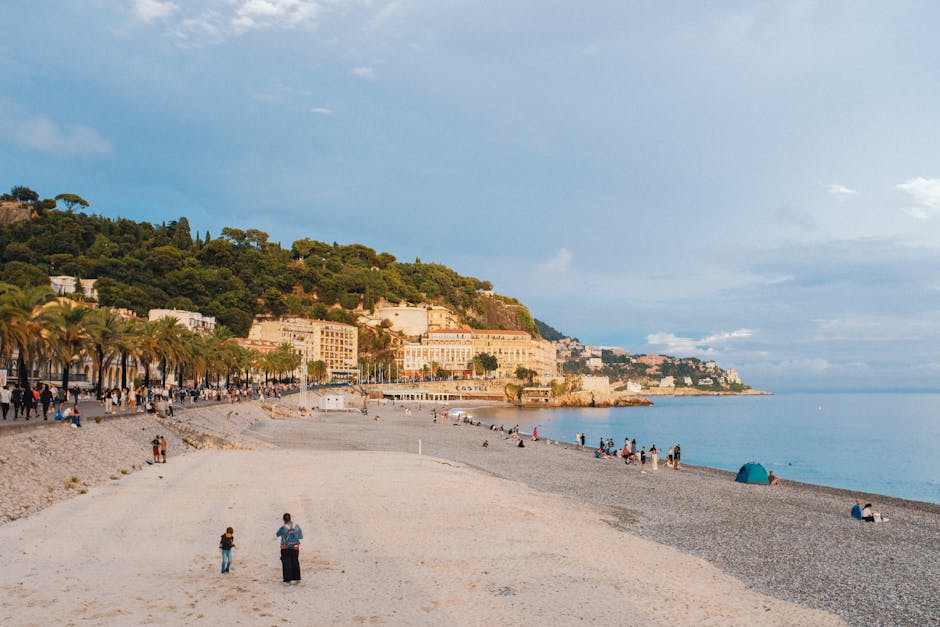
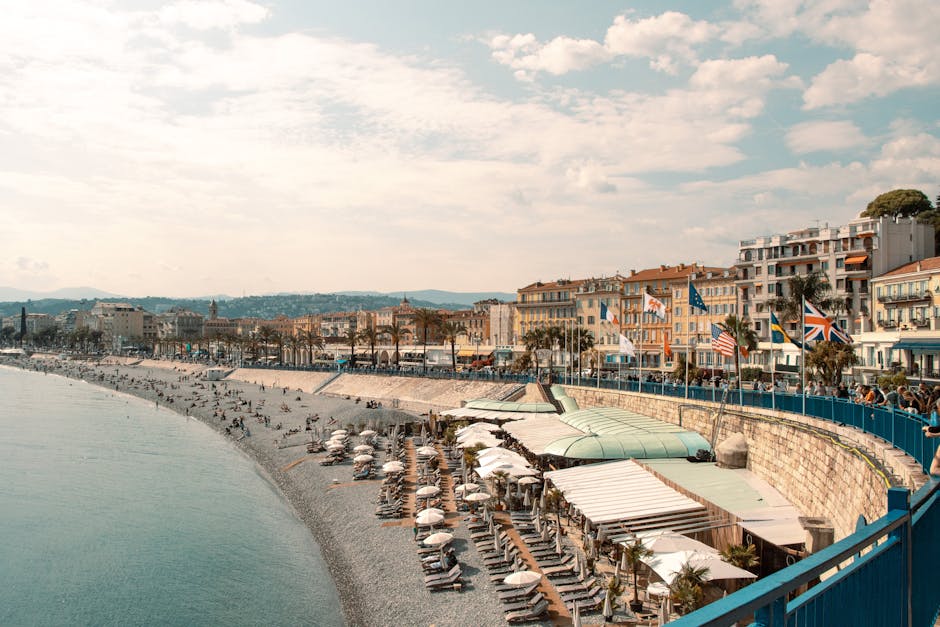
The public beach — free and open to everyone — follows a logic of collective use and access to the sea. Opposite it, private beaches — often run by hotels or independent beach clubs — offer comfort and paid services (sunbeds, umbrellas, changing rooms, food) and a more club-like seaside experience. In Nice the contrast is very visible along the Promenade des Anglais: you move from wide stretches of free shoreline to sections defined by rows of parasols and seasonal infrastructure marking concessions. That separation isn’t random: it’s based on rules for managing the maritime public domain, concessions granted by the town and the state, and a tourist history dating back to the 19th century when the first winter resorts for European aristocracy began reshaping the coast.
In this guide we’ll cover (1) the history that shaped the public/private split, (2) the legal and administrative framework that formalizes these practices, (3) how things work today with concrete examples in Nice — names of beaches, addresses, indicative prices, typical opening hours — and (4) practical local tips to make the most of the sea whether you prefer public or private. You’ll find practical details (exact addresses, prices in euros, approximate schedules), immersive descriptions to picture the areas, and local recommendations to avoid common mistakes. This article aims to be both a historical overview and a hands-on guide for curious travelers and residents who want to better understand their coast.
History: how the split between public and private beaches emerged in Nice
Nice became a major tourist destination from the early 19th century, first as a winter retreat for British and Russian aristocracy, then as a Belle Époque hotspot. The construction of the Promenade des Anglais (Promenade des Anglais, 06000 Nice) between 1820 and 1860, partially funded by British philanthropists and the municipality, organized the waterfront. Early villas, hotels and bathing establishments settled along the shore — this is when the first managed « baths » appeared, gradually allocating stretches of coast to wealthy clients.
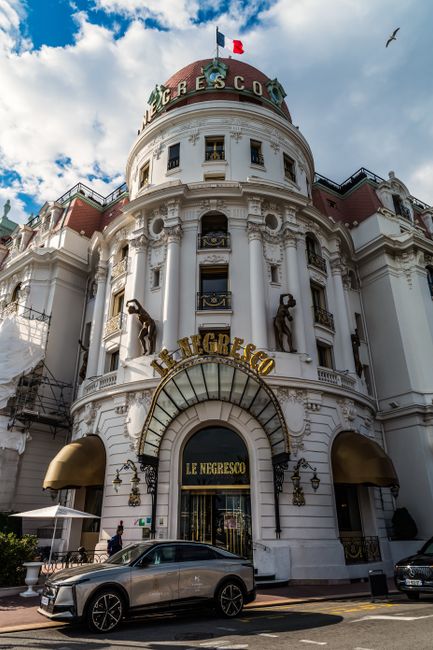
In practice, prestigious hotels like the Hôtel Negresco (Hôtel Le Negresco, 37 Promenade des Anglais, 06000 Nice) and other palaces set up equipped beach sections often reserved for their guests. Over the decades, that practice multiplied into modern « private beaches » or beach clubs that charge for comfort and services. The sand—or in Nice’s case, the pebbles—cannot themselves be privatized: the shoreline belongs to the maritime public domain, but law permits temporary concessions for land use and light structures, allowing free stretches and paid concessions to coexist.
There are two historical threads: one, a tourism model that values paid hotel services and comfort; two, demands for free access to the sea rooted in the republican ideal of equal access to common goods. In Nice these two legacies have coexisted for more than a century. In the 20th century, mass tourism reinforced the commercial logic: specialized operators rented sunbeds and umbrellas, opened restaurants and ran changing rooms. The municipality issues concessions (usually seasonal, renewed or put out to tender) and regulates occupation through municipal decrees.
Important legal and administrative episodes should also be mentioned: after World War II regulation intensified and French law defining the maritime public domain (General Code of Property of Public Persons) clarified the roles of the state and local authorities. Like other major resorts, Nice runs calls for tenders to award « temporary occupation agreements » that authorize lightweight structures (huts, platforms, parasol rows) in exchange for fees. The result today is a shoreline divided into awarded stretches — often arranged almost permanently for the summer season — and portions left open to the public.
Legal and administrative framework: concessions, the maritime public domain and local rules
The separation between public and private beaches in Nice is built on a precise legal framework. In France the coast is part of the « maritime public domain » (DPM), owned by the State. The DPM is inalienable and imprescriptible, meaning it can’t be sold and can’t be gained through long-term possession. Nevertheless, the State (through the maritime prefecture and the departmental prefecture) and communes (like the City of Nice, Hôtel de Ville de Nice, Place Pierre Gautier, 06364 Nice Cedex 4) can authorize « temporary occupation concessions » or « authorizations for use of the public domain » for seasonal tourist activities.
These agreements specify duration (often annual or multi-year), area, authorized equipment (terraces, cabins, platforms, parasol rows) and the fee paid to the public authority. In Nice management is shared: the city handles areas under its competence, while the State is responsible for the maritime strip itself. The town hall issues tenders and awards concessions based on technical, environmental and economic criteria. Private operators must follow strict rules: preserved access to the shoreline (right of way), adherence to safety measures (lifeguards, rescue stations during the season), sanitary standards for catering and waste management.
Practically, a « private beach » is usually just a concession with paid facilities. Access to the water and the submerged coastal strip remains theoretically free, but the physical setup (lined sunbeds, terraces) can make actual access harder for those who haven’t paid. French case law emphasizes equal access: passage corridors must be maintained, especially to reach the sea. For example, the municipality can require several-meter-wide access paths at regular intervals along the coast to guarantee shoreline access.
There are also regulated periods and hours: the tourist season (often mid-May to mid-October) is when concessions are fully exploited, with typical opening hours for private establishments — opening around 09:00, closing between 18:00 and 20:00 depending on the period and weather. Prices are freely set by operators but remain influenced by competition and demand. Finally, the City of Nice regularly publishes practical information and regulations on its official site (www.nice.fr), including beach safety (lifeguard posts, flag systems) and rules for occupying the public domain.
Contemporary use and concrete examples: public beaches, private beaches and typical prices in Nice
On the ground the distinction translates into a varied offer. Here are concrete examples, with addresses, opening times and indicative prices to help you navigate the Nice coastline.
-
Promenade des Anglais Public Beach — Promenade des Anglais, 06000 Nice. Free. Description: long strips of pebbles freely accessible, lively in summer, great for walking and sitting by the water. Tips: bring a folding chair or beach mat — the pebbles aren’t comfortable for lying down. Access: open 24/7 (free access), lifeguard posts installed in season (usually 10:00–18:00).
-
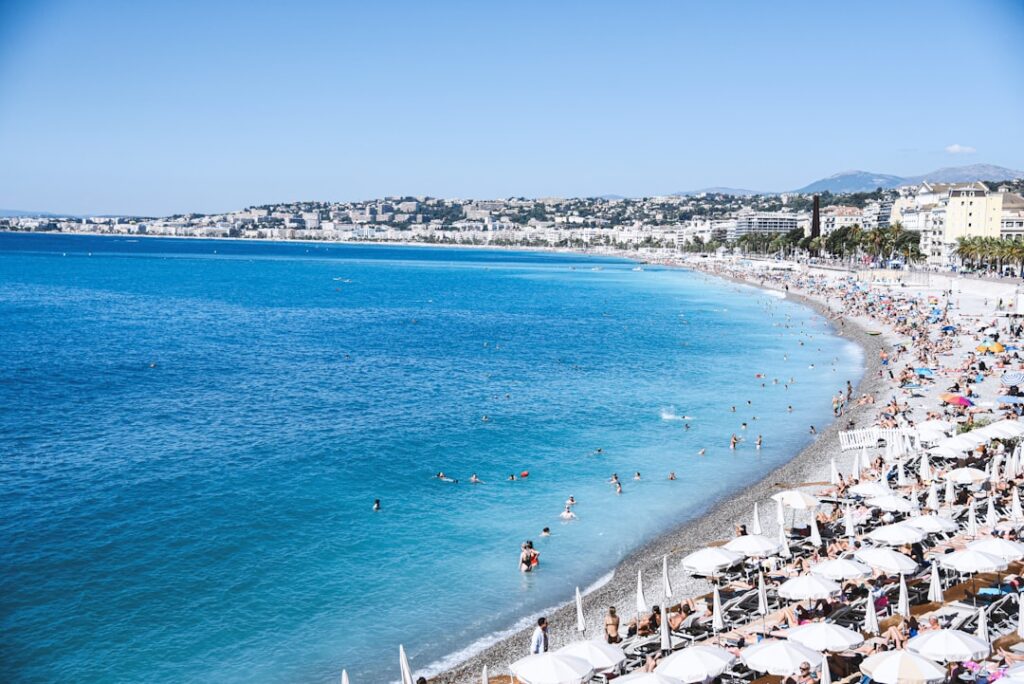
Blue Beach (private beach) — Blue Beach, 33 Promenade des Anglais, 06000 Nice. Hours: generally 09:00–19:00 (summer season). Indicative 2026 prices: sunbed €30–€40/day, umbrella €10–€15/day, lunch menu from €25. Description: iconic seafront venue, aligned sunbeds, restaurant service, family-friendly by day and livelier in the evening. Reservation recommended in high season.
-
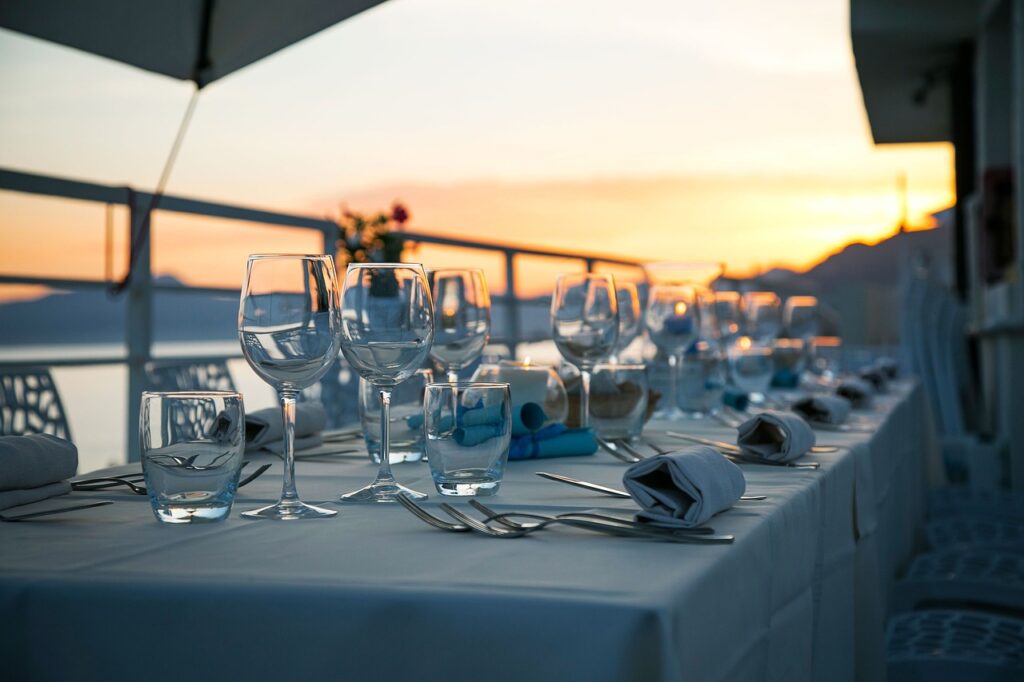
Ruhl Plage (private beach linked to Hôtel Le Negresco) — Ruhl Plage / Hôtel Le Negresco, 37 Promenade des Anglais, 06000 Nice. Hours: 09:00–19:00 season. Approximate prices: sunbed €35–€50/day, lunch packages from €30. Description: chic atmosphere, hotel service, convenient access from the hotel. Tip: ask about the hotel’s « beach card » which can sometimes offer reduced rates.
-
Lascars Public Beach — Beach near Quai des États-Unis, Promenade des Anglais, 06000 Nice. Free. Description: a small public spot popular with locals, with direct access to the Old Town (Vieux-Nice). Services: lifeguard post in season, public showers. Ideal for a quick swim and a local vibe.
-
Castel Plage (nearby but technically in Villefranche-sur-Mer) — Castel Plage, 10 Avenue de la Darse, 06230 Villefranche-sur-Mer (10–20 minutes from Nice by car). Hours: 09:00–19:30. Indicative prices: sunbed €40–€60/day, umbrella €15. Description: small, sought-after club with restaurant and upscale service. Useful to know if you’re exploring beyond Nice.
-
Centenaire Public Beach — Boulevard Franck Pilatte / Plage du Centenaire, 06000 Nice. Free. Description: large public beach favored by families and sports enthusiasts. Activities: volleyball, swimming, walking. Parking available in nearby municipal car parks (prices vary).
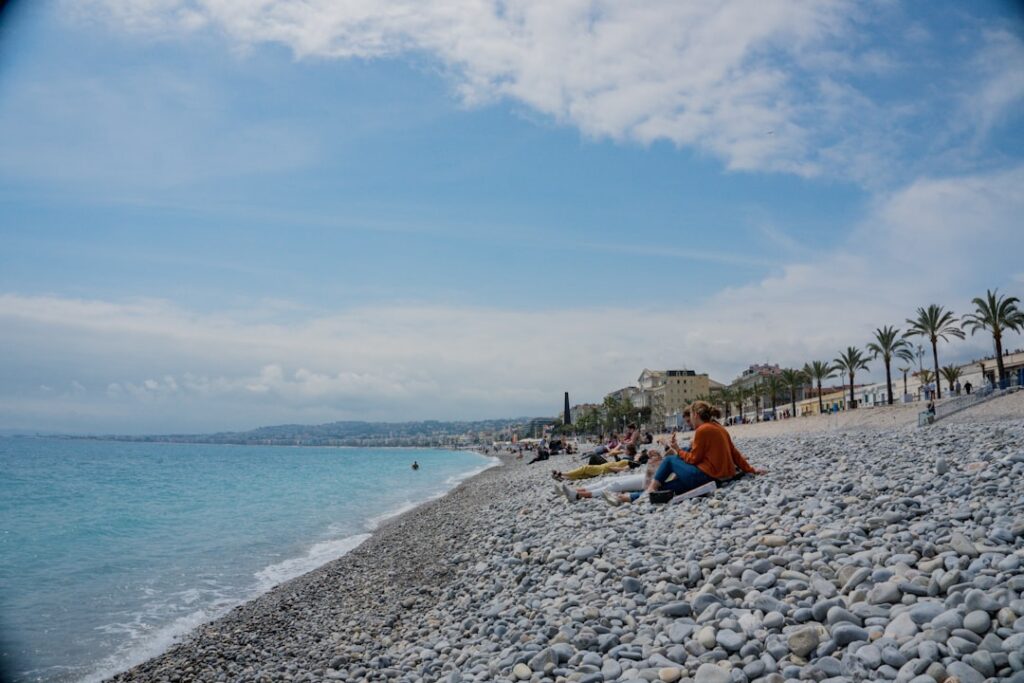
Notes on prices: the rates above are indicative and can vary by season, exact location, special events (e.g. Nice Carnival, Grand Prix) and each operator’s commercial policy. Generally, a full day on a private beach in Nice costs between €25 and €60 per person (sunbed + umbrella + access), sometimes more for upscale clubs. Public beaches remain the cheapest option — free — but require a bit more planning (mats, coolers, less comfort on pebbles).
Hours and services: most private beaches open between 09:00 and 10:00 and close between 18:00 and 20:00. Lifeguard posts and supervised swimming on public beaches are usually active between 10:00 and 18:00–19:00 during high season (mid-June to mid-September). Always check the safety flags (green = swimming allowed, orange = caution, red = no swimming) and follow the instructions of lifeguards.
Practical tips and local habits: how to choose between public and private and get the most out of your visit
Choosing between public and private beach comes down to priorities: budget, comfort, services and atmosphere. Here are concrete local tips to optimize your Nice beach experience.
- Budget and comfort: if you’re on a tight budget, choose public beaches (they’re free). Tip: bring a folding chair or an inflatable mattress for the pebbles. For comfort and service (towels, on-site dining, private toilets), go private. Example: Blue Beach (33 Promenade des Anglais) offers a « sunbed + umbrella + service » package for visitors who want hassle-free relaxation.
- Booking: in high season (July–August) private beaches often fill up in the morning. Book by phone or via the venue’s website. Ruhl Plage / Hôtel Le Negresco (37 Promenade des Anglais) recommends booking for lunch and weekend sunbeds.
- Access and mobility: the Promenade des Anglais gets very busy; arrive early (before 10:00) for a good spot on public beaches. Nearby municipal car parks (e.g. Parking Promenade des Arts, Avenue de Verdun) charge variable rates around €2–€4/hour. Public transport (tram line L1 — stops « Garibaldi » or « Masséna ») makes the area easy to reach without a car.
- Safety: watch the flags and follow instructions. In an emergency call 112 (European emergency number) or go to the nearest lifeguard post (hours posted in season).
- Local etiquette: locals appreciate respect for the spaces: no loud music on public beaches, take your trash with you or use bins, and respect access corridors near private beaches. If you just need to cross a private area to reach the sea, ask politely: many operators tolerate passage if you don’t disturb their guests.
- Alternatives: if you’re after sand (most Nice beaches are pebbly), consider nearby towns with sandy beaches like Cannes (Plage du Martinez, 73 Boulevard de la Croisette, 06400 Cannes) or Antibes (Plage de la Gravette, Place Nationale, 06600 Antibes). Expect 30–60 minutes by train or car from Nice.
Social and environmental impact: debates around coastal privatization
The presence of private beaches regularly sparks debate: access to the shore, urban equity, and visual and environmental impacts. Supporters point to local jobs created (beach staff, catering), the maintenance provided (waste collection, cleaning of facilities) and the service offering that supports tourism. Critics highlight the fragmentation of public space, feelings of exclusion for lower-income residents and the commercial transformation of the coastline.
Environmentally, concessions can have mixed effects: well-managed, they comply with coastal protection rules and help keep areas clean; poorly managed, they produce waste, noise and excessive artificialization. The City of Nice imposes strict rules to limit impact: banning permanent fixed installations on the public domain without authorization, mandatory waste management, and in certain areas special measures to protect coastal fauna and flora.
Urban planning questions also affect the visual landscape: rows of parasols and temporary terraces change the bay’s aesthetics. The city works, especially during major events (Carnival, Nice Jazz Festival), to balance attractiveness, landscape preservation and everyone’s right of access.
Local interventions and citizen initiatives
Local associations and user groups watch over public access and take part in public consultations about concessions. For example, before awarding an important concession the city sometimes holds public meetings where residents, environmental groups and operators discuss the terms. These forums influence occupation conditions: requirements for access corridors, limits on spatial footprint, or sustainable catering conditions (waste sorting, reduced plastic use).

Conclusion — Between tradition, legality and local practice: a separation negotiated day by day
The split between public and private beaches in Nice is the product of a long tourist history, a precise legal framework and current practices that respond to sometimes conflicting expectations: free public access to the sea on one side, paid comfort and services on the other. Nice’s public beaches, free and open, provide the essentials — the sea, the light, the sociability — while private beaches offer extra comfort (sunbeds, umbrellas, catering) for a fee usually between €25 and €60 per day.
Knowing the history (Promenade des Anglais, iconic hotels), the law (maritime public domain, concessions) and the practices (hours, prices, local rules) helps you choose according to your priorities. Arrive early for public beaches, book private clubs in high season, respect access corridors and safety instructions, and remember that Nice’s coastline is a shared space: coexistence relies daily on rules and the vigilance of authorities and citizens.
One last practical tip: for a full Nice experience, combine a morning on a public beach (free and authentic), lunch at a private beach venue to enjoy the comforts, then a stroll along the Promenade des Anglais and a visit to the Old Town (Place Rossetti, Rue Droite) in the evening. That way you’ll experience all the different uses this unique shoreline has to offer, while respecting the laws and local customs that shaped the public/private divide.